1 spoon (silicone-coated is great for this - Meijer)
Instructions:
Fill a pot with filtered water and bring it to a boil on the stove. Make sure it's boiling nice and hard so that when you add the pasta it doesn't cool it down too much.
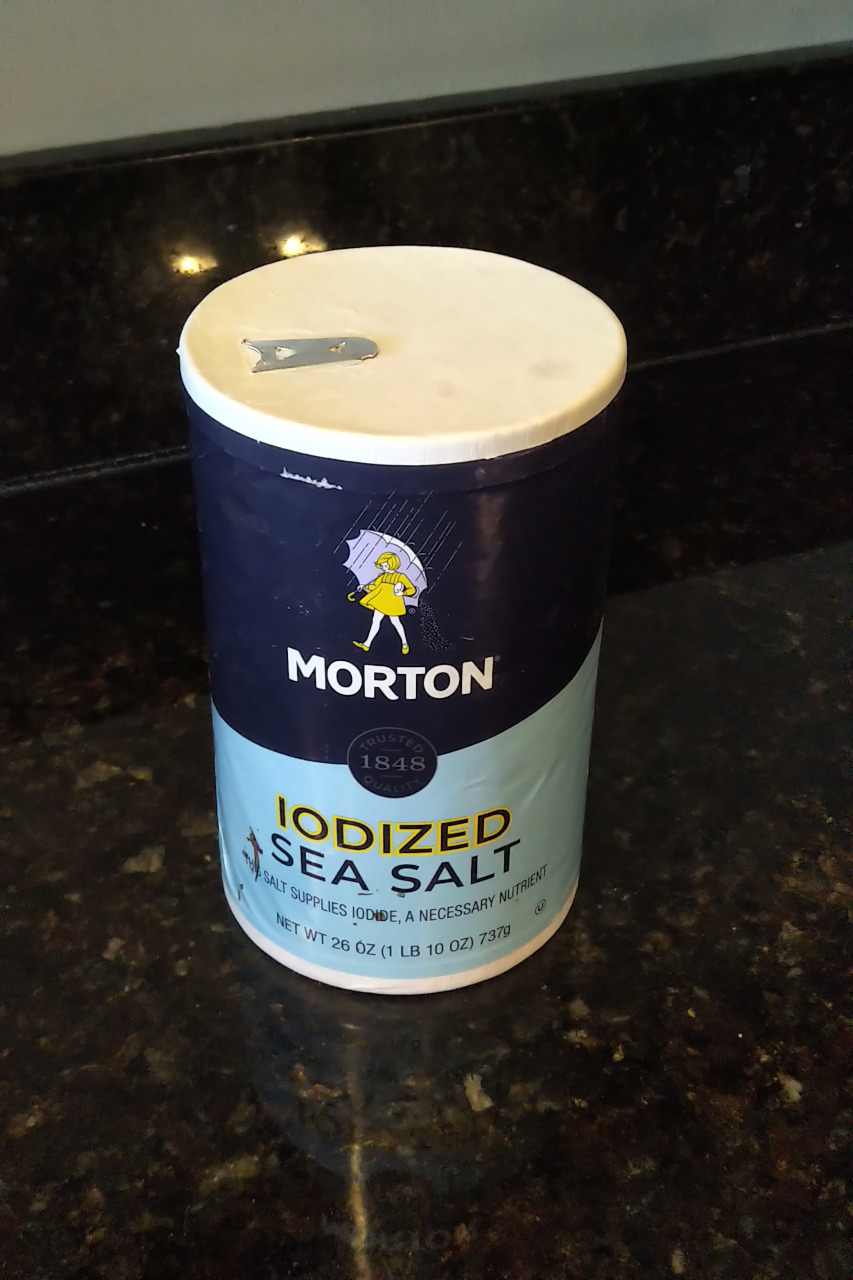
Add a whole bunch of salt. This soaks into the pasta and gives it a nice taste. You'll have to experiment, though, to see how much you like. I probably use upwards of a tablespoon of it per pot.
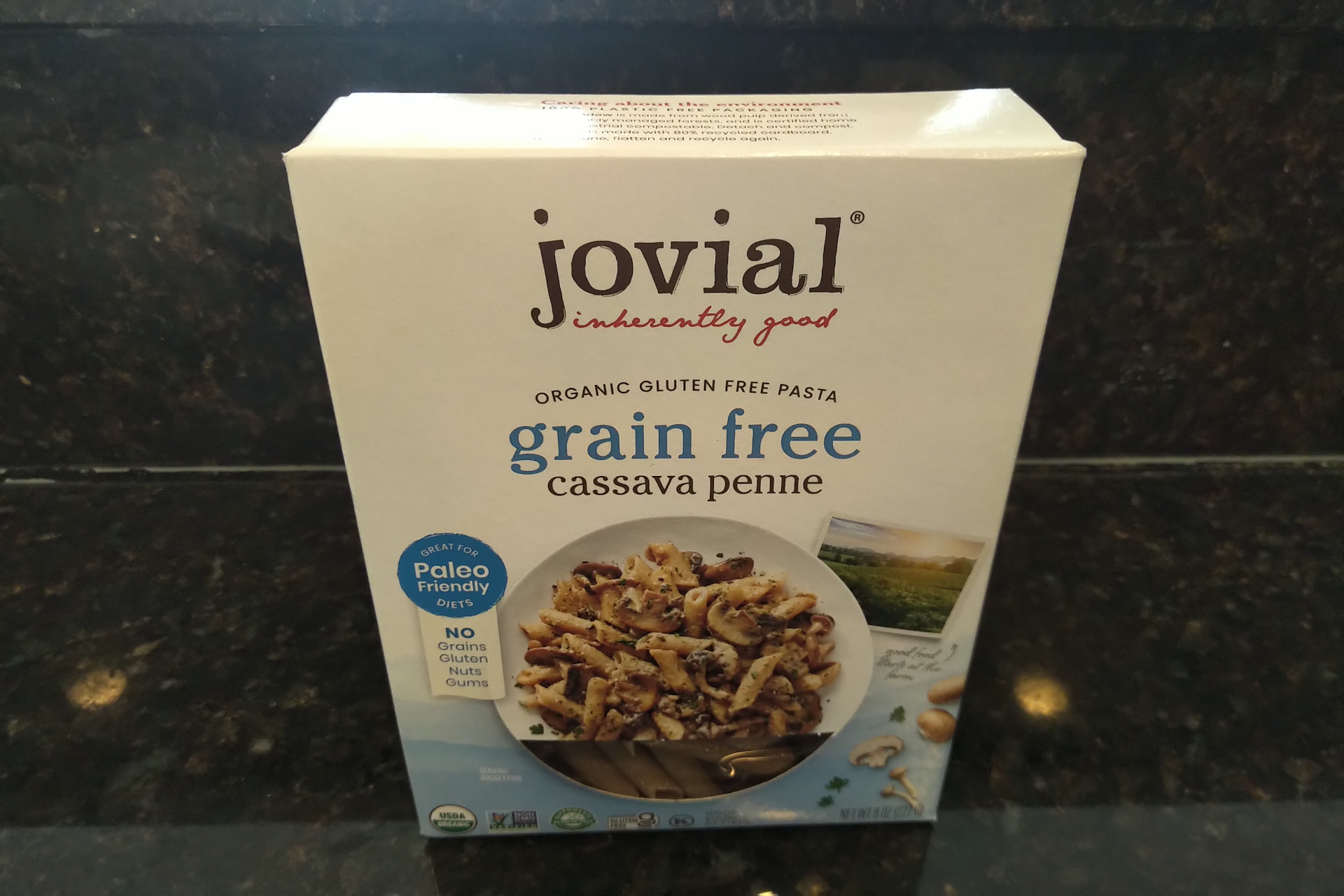
Dump in the package of pasta.
Gently stir the water once in a while for the next few minutes to make sure the pasta doesn't stick to the bottom or sides of the pot. Try not to scratch up the ceramic coating on the pot. Use a silicone-coated spoon if possible.
After about 9 minutes (depending on your stove), fish out a noodle and try it to see if it's cooked. Do this every minute or so until the starch stops sticking to your teeth. Ultimately, cooking will likely take around 11 minutes total.
Drain off the water.
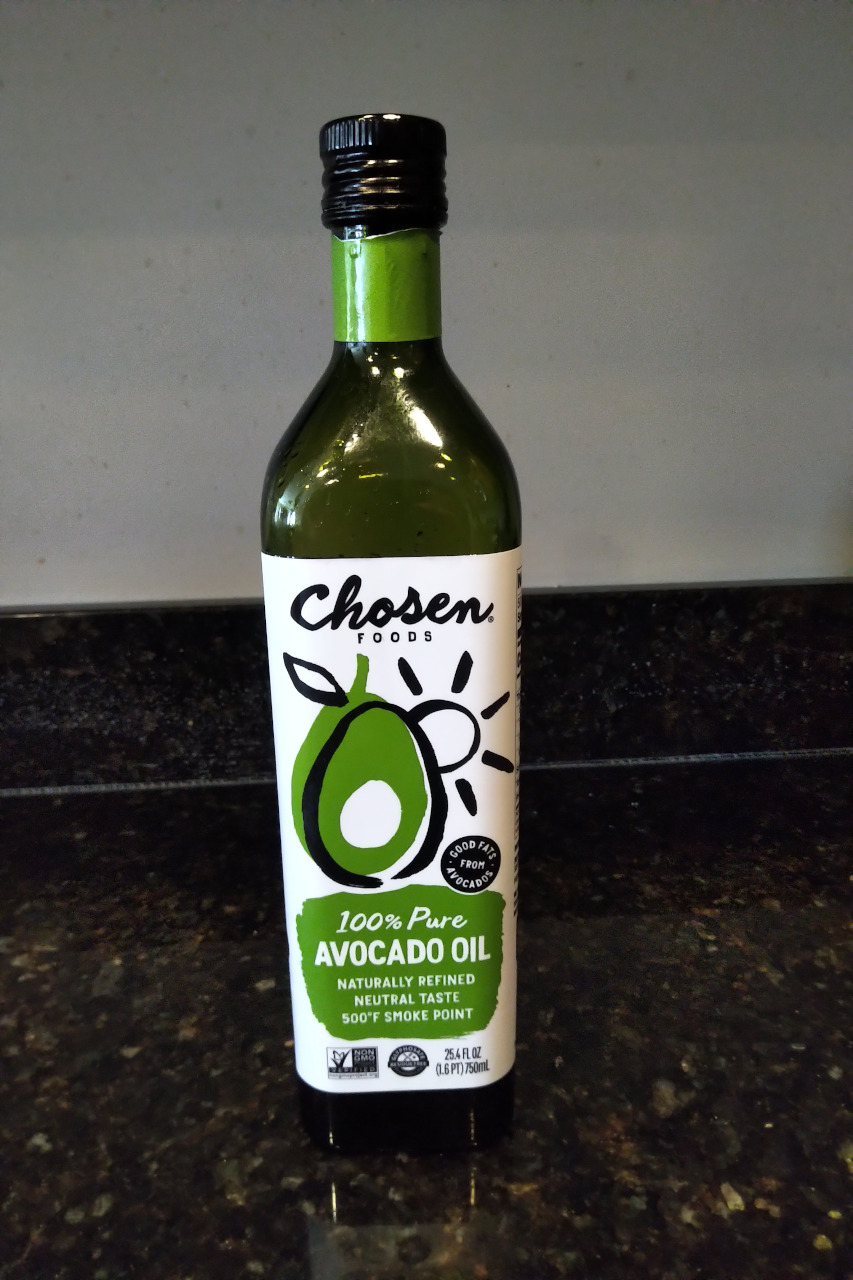
Add enough avocado oil to keep the pasta from sticking together and stir them a bit to coat them. If you skip this step and save leftover pasta in the fridge for later, they will stick together into one giant glob.
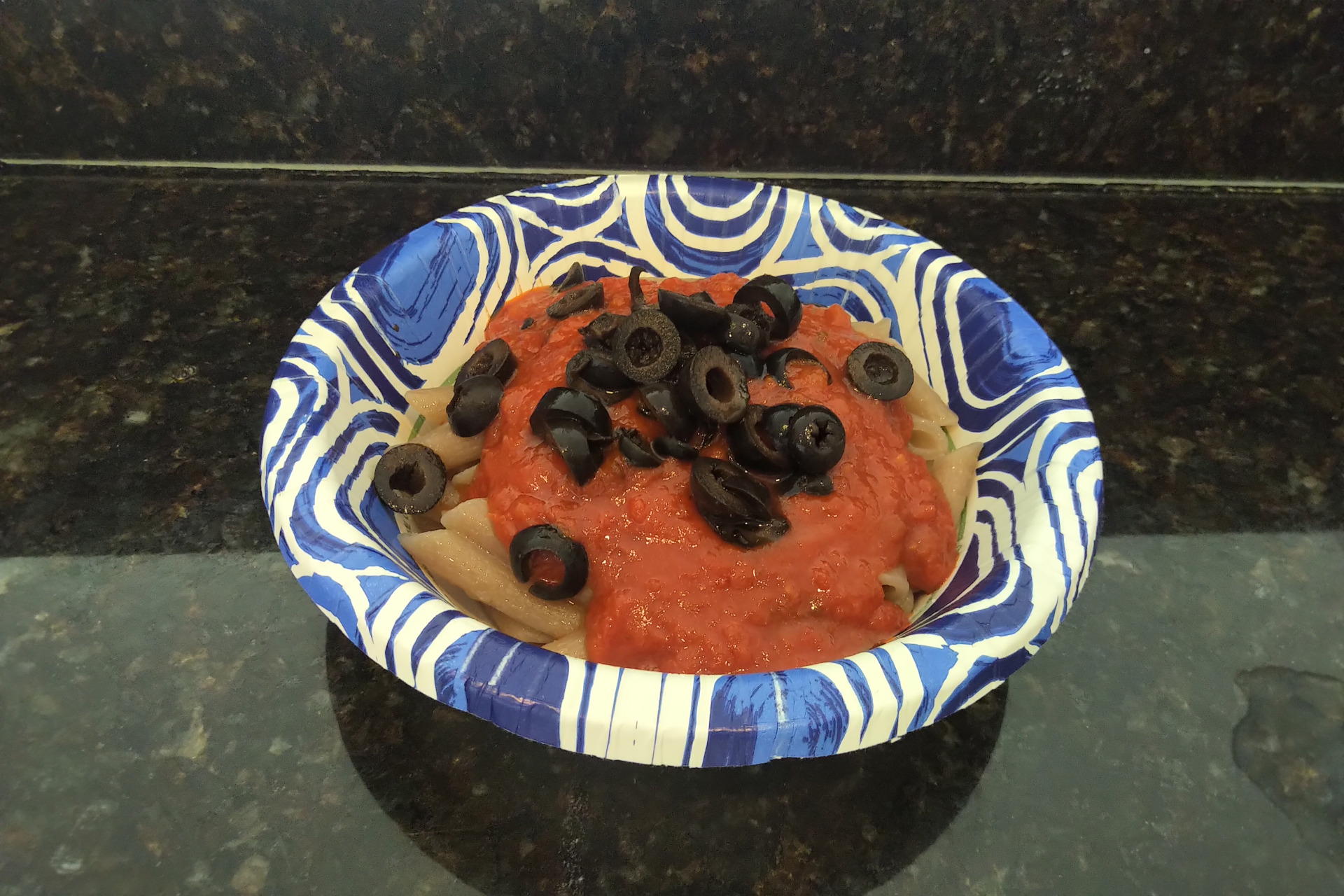
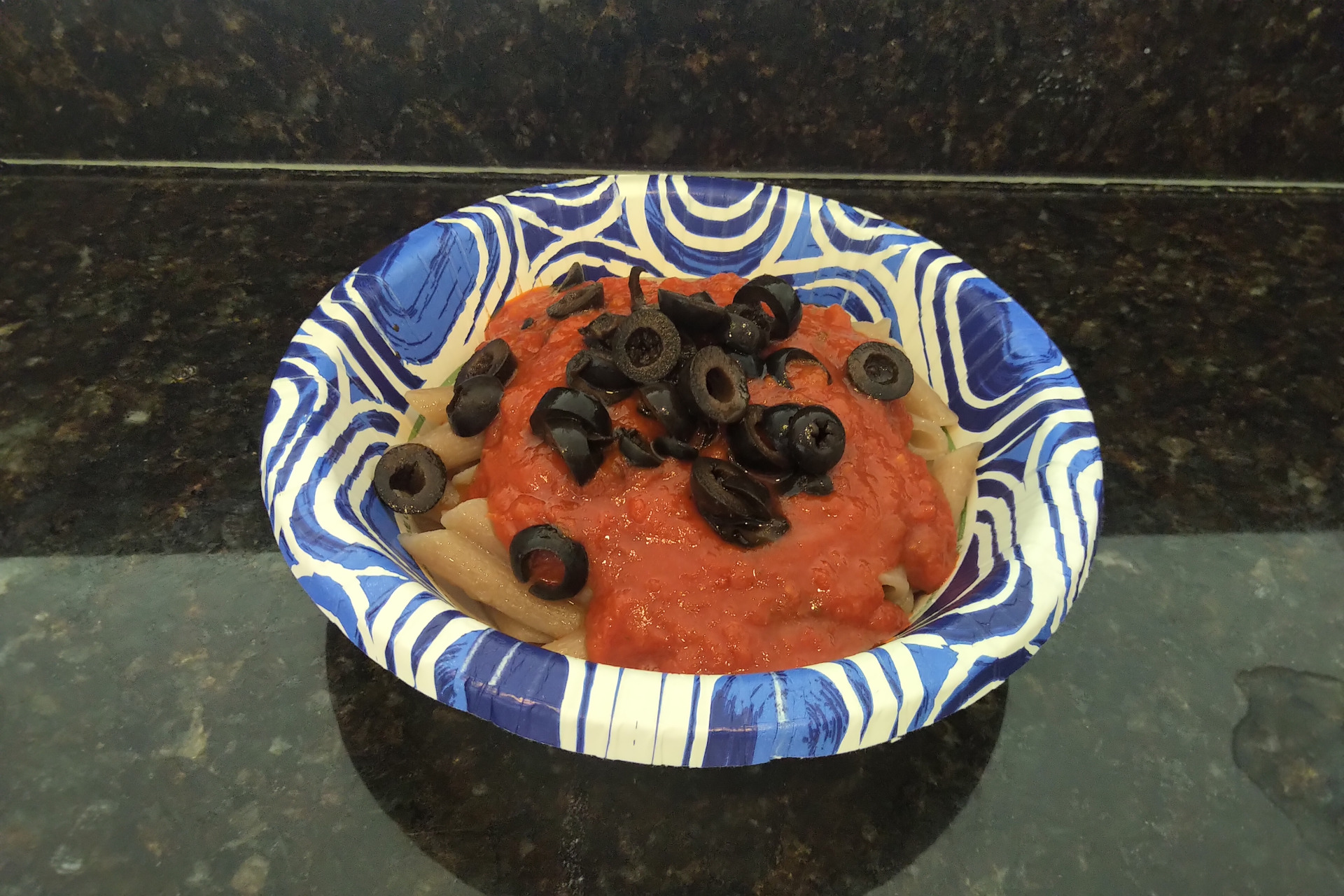
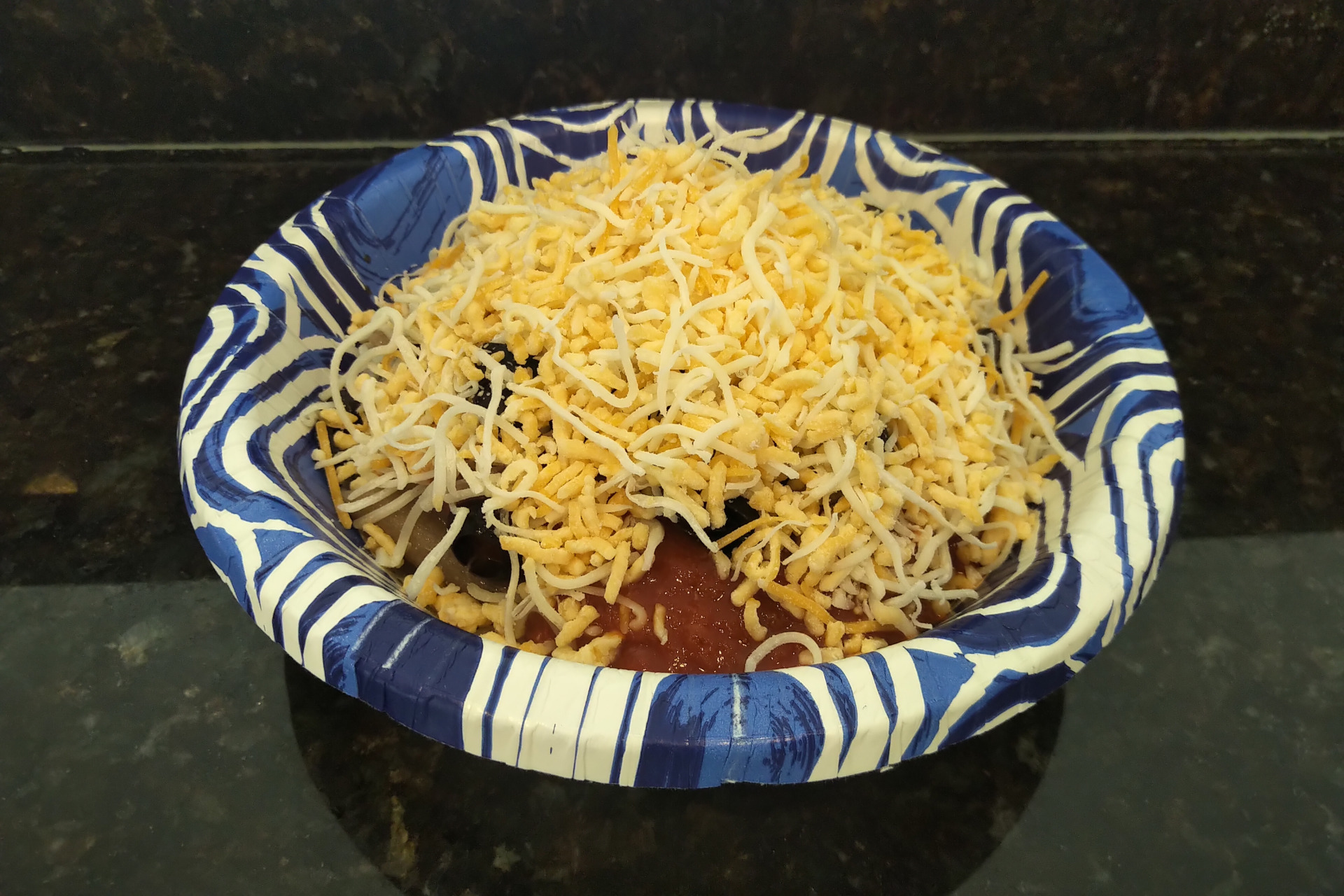
To serve, put pasta in a bowl, add pasta sauce and as much or as little salt as you want for it to taste good, and stir together to coat. Optionally, top with olives and cheese.
Use this information at your own risk. Food product manufacturers have an annoying habit of changing their products' ingredients without marking it on the label, so the foods that were allergy-safe one month may not be the next month.